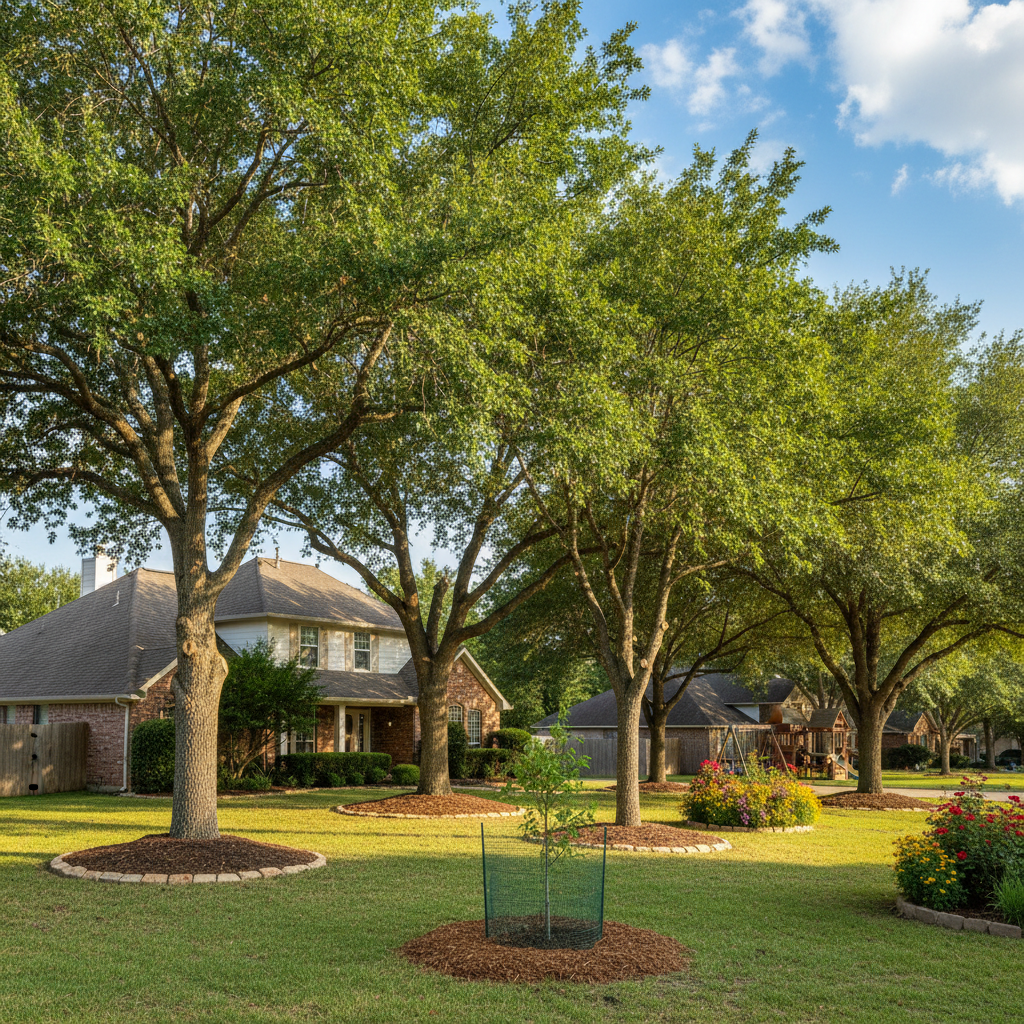
You've got a tree that needs some attention, maybe it's looking a little sickly, or branches are getting too close to the house. It's a common situation out here in Huffman, especially with our big, beautiful oaks and pines. But I've seen folks make the same avoidable mistakes over and over when they're trying to get their trees healthy or just trimmed up. Let's talk about what to watch out for so you don't end up regretting your tree care project.
Mistake #1: Hiring the Cheapest Bid Without Checking Credentials
This is probably the biggest one, and it's a classic. Someone knocks on your door, or you see a flyer, and they offer a price that seems too good to be true. Guess what? It probably is. A legitimate tree service, like New Look Tree, carries insurance – liability and workers' comp. That's not cheap, but it protects you. If some guy with a chainsaw and a beat-up truck cuts a limb that falls on your roof, or worse, on your neighbor's car, and he's not insured, guess who's on the hook? You are. Always ask for proof of insurance. Don't just take their word for it. Call their insurance company to verify it's current and covers the type of work they're doing.
Mistake #2: Not Understanding What Your Tree Really Needs
Sometimes you think your tree needs a severe trim, but what it really needs is some deep root fertilization or disease treatment. Or maybe you're asking for 'topping,' which is almost always a terrible idea for a tree's long-term health. Topping stresses the tree, makes it more susceptible to disease, and often leads to weak, rapid growth that'll just break off later. A good arborist won't just do what you ask; they'll explain what's best for the tree and why. They'll talk about structural pruning, crown thinning, or deadwood removal. If a company agrees to top your tree without a second thought, that's a big red flag.
Mistake #3: Ignoring Local Regulations and Permits
Believe it or not, depending on what you're doing, you might need a permit. Especially if you're dealing with protected trees or if the work impacts utility lines. It's not as common for a simple trim in a residential yard in Huffman as it might be in some bigger cities, but it's worth a quick check with the county or even your HOA if you live in a planned community like Commons of Lake Houston. A reputable tree service will usually know about these things and can advise you. If they don't mention it, or worse, tell you not to worry about it when you should, that's a problem.
Mistake #4: Not Getting a Written Estimate and Contract
A handshake agreement might feel neighborly, but it leaves too much open to interpretation. Get everything in writing. The estimate should clearly detail the scope of work: which trees, what type of pruning, stump grinding (if applicable), and debris removal. It should also include the total cost and payment terms. A contract protects both you and the tree service. It prevents misunderstandings about what was agreed upon and what the final bill will be. I've seen too many disputes that could have been avoided with a simple piece of paper detailing the job.
Mistake #5: Neglecting Post-Service Cleanup
This one's a pet peeve of mine. Some outfits will do the work, collect their money, and leave you with a yard full of sawdust, branches, and leaves. Part of a professional tree service is cleaning up after themselves. Make sure the estimate or contract specifies that all debris will be removed and the area will be left tidy. You shouldn't have to spend your weekend raking up after someone else's work. We always make sure the job site is cleaner than we found it.
Mistake #6: Waiting Until It's an Emergency
I get it, life gets busy. But waiting until a storm is brewing, or a branch is actively threatening your house, is not the time to look for a tree service. Emergency services cost more, and you'll have fewer options. Regular maintenance, like annual inspections and timely pruning, can prevent most emergencies. Our clay soil out here in Huffman can get pretty saturated after a good rain, and that's when you see trees start to lean or roots get compromised. Proactive care is always cheaper and safer than reactive panic.
Taking care of your trees is an investment in your property and the environment. Don't cut corners or rush into decisions. Do your homework, ask the right questions, and choose a professional who cares about your trees as much as you do. You'll be glad you did.