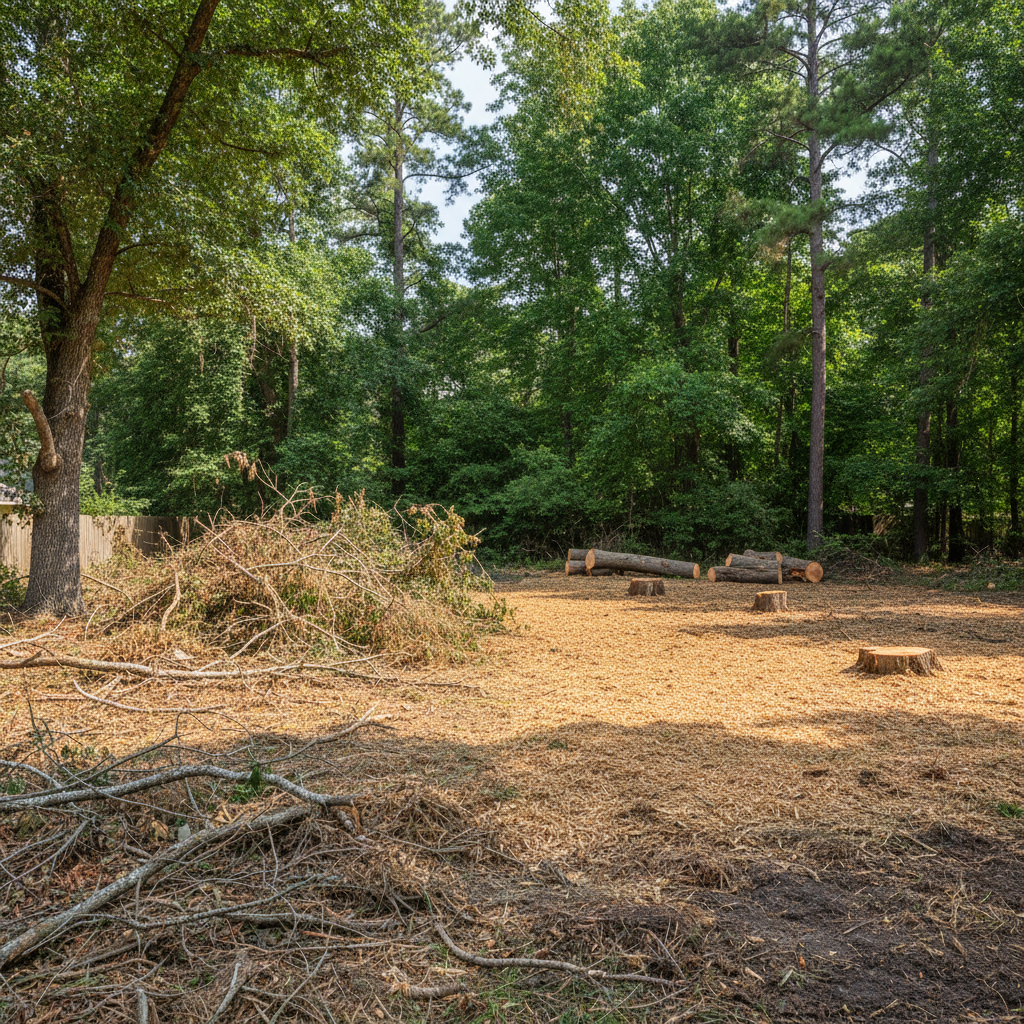
Got some land in Huffman that needs clearing? You're probably scratching your head, wondering how best to tackle it. I see folks all the time debating between two main approaches: traditional clearing, where you cut everything down and haul it away, and forestry mulching. That second one's a bit newer, sure, but it's really catching on. Let's dig into both, shall we? That way, you can make a smart choice for your place.
Traditional Lot Clearing: The Old Standby
When I talk about 'traditional clearing,' I mean the method most people picture in their heads. You bring in crews with chainsaws, excavators, dump trucks — the whole nine yards. They chop down trees and brush, then load it all up and haul it off to a disposal site or a burn pile (if the permits are in order, of course). It's been the go-to for a long time, and honestly, it makes sense in certain situations.
Cost & Time
The cost for traditional clearing can swing wildly. It really just depends on how thick your growth is and how much stuff needs to go. You're paying for the labor, equipment rentals (think excavators, loaders, dump trucks), and those disposal fees. And let me tell you, those disposal fees, especially for bigger jobs, can really add up fast. It's often a multi-step deal: cut, stack, load, haul. This can take a while, particularly if you've got a lot of big trees or really dense underbrush.
Durability & Maintenance
Once the land is cleared the traditional way, it's pretty much a blank slate. You're left with bare soil, which is fantastic if you're planning to build right away or put in a pasture. But that bare soil is also super vulnerable to erosion, especially with our heavy Texas rains. I've seen plenty of properties around Lake Houston where the topsoil just washes away if it isn't protected. And without any ground cover, guess what? New weeds and brush will pop up pretty quickly. You'll need to stay on top of mowing or spraying to keep it clear.
Appearance
The look is clean, often right down to the bare earth. If you want a perfectly manicured look right off the bat, or you're getting a site ready for construction where you need to dig foundations, this is usually the way to go. You won't see any stumps or debris if the crew does their job right.
Forestry Mulching: The Modern Way
Forestry mulching uses special machinery — often called a 'forestry mulcher' or 'brush masticator' — that grinds up trees, brush, and undergrowth right where it stands. It turns everything into a layer of wood chips and organic material, leaving it right there on the ground.
Cost & Time
For many projects, forestry mulching can actually save you money compared to traditional clearing. You're generally paying for one piece of equipment and one operator, not a whole crew with multiple machines and all those disposal costs. Since nothing gets hauled away, you skip those trucking and disposal fees entirely. It's also incredibly efficient. A good mulcher can clear a lot of land in a single day, often much faster than a traditional crew, which, you guessed it, saves you money on labor hours.
Durability & Maintenance
This is where mulching really shines, especially for us folks here in Huffman. That layer of wood chips left behind acts just like a natural mulch. It helps stop erosion by protecting the soil from heavy rainfall. It also keeps new weeds from sprouting up, meaning less work for you down the road. Over time, those chips break down, adding valuable organic matter back into your soil — a huge benefit for our often clay-heavy soils. You'll still get some regrowth, but it's usually much slower and way easier to manage than on bare ground. What's not to like?
Appearance
The look after mulching is different from traditional clearing. You'll have a uniform layer of wood chips covering the ground. It looks natural, almost like a well-maintained forest floor. If you're looking to create trails, improve hunting land, or just clean up an overgrown area without making it look like a construction site, mulching is fantastic. It's not a bare-earth finish, but it's clean and tidy in its own way.
Which One Should You Choose? My Recommendation.
So, which method is the right fit for your Huffman property? Honestly, it really boils down to what you're trying to achieve.
- If you're building a house, a barn, or need to dig a foundation right away, traditional clearing might be your best bet. You need that bare earth for construction, after all.
- If you're looking to clear land for pasture, create defensible space around your home, build trails, improve hunting access, or just generally clean up overgrown areas and want to maintain a more natural look with less long-term maintenance, forestry mulching is usually the smarter choice.
For most homeowners I work with in Huffman, especially those with larger, overgrown lots, forestry mulching offers a ton of advantages. It's often quicker, better for the environment, and leaves you with a healthier, easier-to-maintain property. You avoid the erosion issues that can plague bare ground, and you get that natural ground cover that helps keep new growth at bay.
We do both types of clearing at New Look Tree, so I've seen firsthand the pros and cons of each. If you're still unsure, give us a call. We can come out, take a look at your specific property, and help you figure out the best approach for your land and your budget.