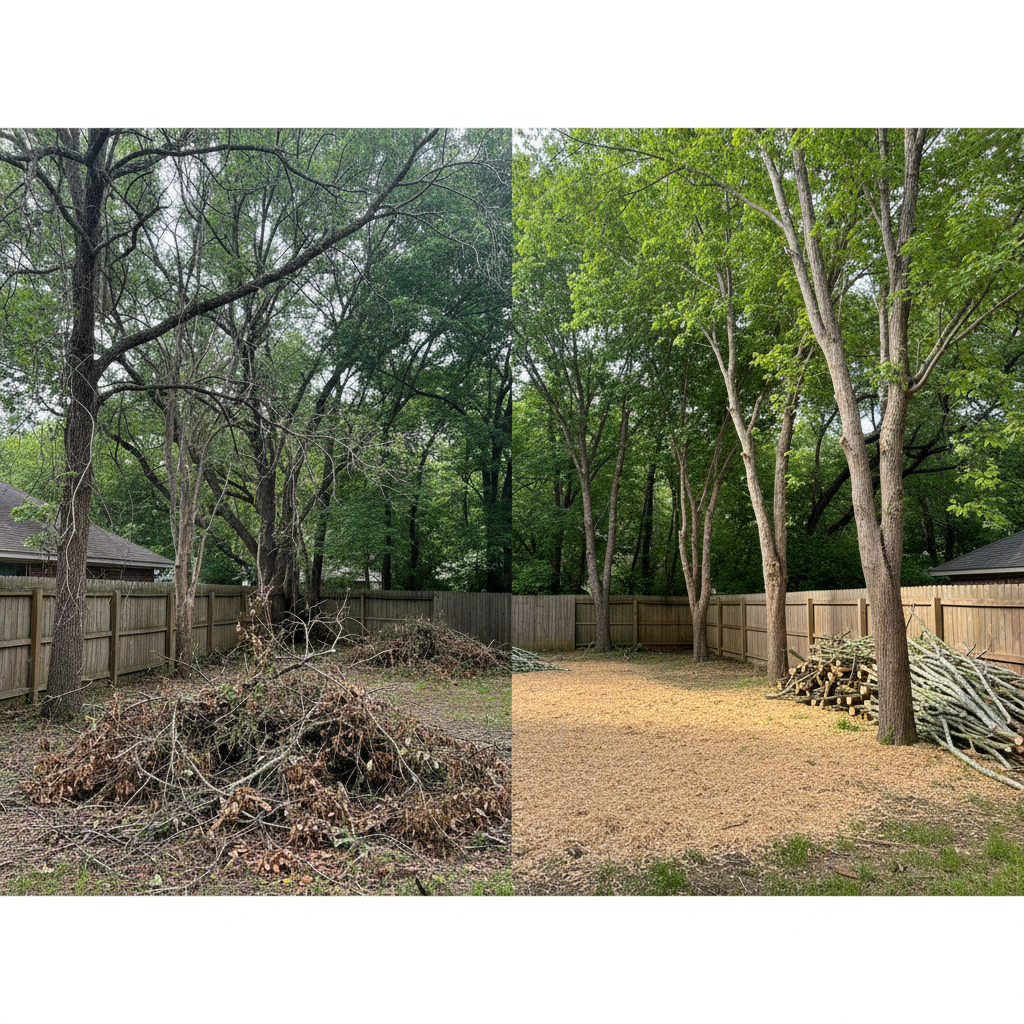
Alright, let's talk about tree trimming. You've got a tree that's gotten a bit too big, or maybe it's looking a little rough around the edges, and you're thinking about getting it shaped up. Good idea! But here's the thing: there are two main ways folks go about it, and one of 'em is a whole lot better for your tree – and your pocketbook – in the long run. I'm talking about topping versus proper, structural pruning.
What Exactly Is Tree Topping?
You've probably seen it, even if you didn't know what it was called. Tree topping is when someone just lops off the top and ends of major branches, often leaving behind stubs or short, upright shoots. It's usually done to reduce the tree's height quickly or to make it look 'smaller.' Sometimes people call it 'hat-racking' because that's what it looks like – a hat rack with stubs sticking out. It's a quick fix, sure, but it's a brutal one for the tree.
The Downside of Topping: Why It's Bad News
Look, I'm not gonna sugarcoat it. Topping is almost always a bad idea. Here's why:
- It's a huge shock to the tree: When you cut off that much of a tree's crown, you're removing a massive amount of its food-producing leaves. The tree goes into survival mode, trying to grow back leaves as fast as possible. This stress weakens it significantly.
- Weak, rapid regrowth: Those shoots that sprout back after topping? They're called 'water sprouts,' and they grow incredibly fast, but they're weakly attached. They're basically just bark and not integrated into the tree's structure. This means they're much more prone to breaking off in a strong gust of wind, which, let's be honest, we get plenty of around Huffman.
- Increased disease and pest risk: Those big, open wounds left by topping? They're like open invitations for insects, fungi, and diseases. A healthy tree can usually compartmentalize smaller wounds, but these massive cuts are just too much.
- Ugly appearance: Let's be real, a topped tree looks terrible. It loses its natural shape, and those bushy water sprouts just make it look like a bad haircut.
- More expensive in the long run: You might think topping is cheaper upfront because it's fast, but you'll pay for it later. Those weak sprouts need constant re-trimming, the tree might get sick and need expensive treatments, or it could even die and need full removal.
What Is Proper Structural Pruning?
Now, proper pruning, that's a whole different ballgame. This is what you want for your trees. It's a thoughtful, strategic approach that focuses on the tree's health, safety, and natural form. When we do structural pruning at New Look Tree, we're looking at a few key things:
- Removing dead or diseased branches: This is a no-brainer. Get rid of anything that's already compromised to prevent further spread and improve overall health.
- Thinning the crown: We'll carefully remove some interior branches to improve air circulation and light penetration. This helps reduce disease risk and encourages stronger growth.
- Raising the crown: Sometimes branches are too low, interfering with structures or pathways. We can remove lower branches to create clearance without harming the tree.
- Reducing the crown: If a tree is getting too big for its space, we can reduce its size by cutting back to lateral branches that are at least one-third the diameter of the removed branch. This maintains the tree's natural shape and health.
- Improving structure: We're looking for branches that are rubbing, crossing, or have weak attachments. We'll make cuts that encourage strong, well-spaced branches that can withstand our local storms better.
Cost, Durability, Maintenance, and Appearance: A Quick Comparison
Let's break down how these two stack up:
- Cost: Topping might seem cheaper initially, but proper pruning is an investment that saves you money long-term by preventing disease, structural failures, and the need for frequent, costly re-trims or removals.
- Durability: A properly pruned tree is stronger, healthier, and much more resilient to wind, storms, and pests. A topped tree is weak, prone to breakage, and has a shorter lifespan.
- Maintenance: Topped trees require frequent, often annual, re-trimming of those fast-growing water sprouts. Properly pruned trees, especially mature ones, often only need attention every 3-5 years, sometimes even longer.
- Appearance: No contest here. Proper pruning enhances a tree's natural beauty and form. Topping leaves a tree looking disfigured and unnatural.
My Recommendation for Huffman Homeowners
Given our climate here in Huffman – the humidity, the occasional drought, and those strong Gulf Coast storms that roll through – you absolutely want your trees to be as strong and healthy as possible. The clay soil we often deal with can sometimes make it harder for trees to establish deep, stable root systems, so a strong, well-pruned crown is even more critical for stability.
For the health, safety, and beauty of your property, always choose proper structural pruning. It's the responsible choice, and it's the one that will give you the most value over time. Don't let someone convince you that topping is a good solution. If you're looking for a tree service that understands the science and art of tree care, give us a call at New Look Tree. We'll make sure your trees are trimmed right, keeping them healthy and beautiful for years to come.